













The cost of a B2B website redesign depends on six main factors: distinct page types, localization, content readiness, migration, integrations, and responsibilities after launch. The final quote should explain what needs to be designed, built, moved, connected, tested, and maintained. Counting pages alone will miss much of that work.
At Webgate, our work with marketing teams has included large multilingual migrations, custom booking flows, reusable landing-page systems, and ongoing website operations. Those projects have taught us to ask a more useful budgeting question: what must the website help your team do, and what needs to change to make that possible?
How much does a B2B website redesign cost at Webgate?
Our website pricing separates three services:
- Design from €2,000: a fixed project covering website strategy and UX/UI design.
- Development from €6,000: a fixed implementation project for teams with designs and content ready.
- Ongoing support from €500 per month: a monthly subscription with an agreed scope of website support and improvements.
These are individual service starting prices. A complete redesign needs a project-specific quote that accounts for the work your team requires. Content production, extensive migration, additional languages, and custom integrations need to be explicitly addressed in that scope.
The six factors below explain how we get from an initial brief to a meaningful estimate.
1. How many distinct page types does the website need?
A page type is a repeatable layout with a particular purpose, content structure, and behaviour. A product page, customer story, resource listing, and demo-booking page are different types, even if they share a visual style.
For an accurate estimate, separate three quantities:
- Unique templates: the different layouts and behaviours that need design and development.
- Reusable components: sections such as feature grids, testimonials, comparison blocks, and calls to action.
- Pages and content records: the individual items that need population, migration, and checks.
For example, 20 product pages using one approved template involve different design effort from 20 pages with individual layouts and interactions. The reusable version still needs content and testing on every page, but its layout can be built once.
Our Bloomreach project covered a website with 1,200+ pages across three languages. Its reusable system included 40+ page templates and 50+ components. Those numbers describe different parts of the work: website volume, design and development scope, and the system marketers use to create future pages.
Behaviour also matters. A resource hub may require filters, categories, search, related content, and shareable filtered URLs. Someone must define those relationships and classify the existing content. A visually simple listing can therefore take more work than several ordinary content pages.
Before requesting a quote, group your sitemap into page families and identify any filters, calculators, forms, or other custom behaviour.
2. How much localization does each market require?
Localization adds work across content, functionality, and quality assurance. It includes translating navigation, forms, error messages, page metadata, and downloadable assets, then checking that each version works for its audience.
A multilingual scope should answer:
- Which pages and resources are required in each language at launch?
- Can existing translations be exported and matched to the new content structure?
- Who translates, reviews, populates, and approves each language?
- Which templates and content fields stay synchronized, and which can local teams change?
- Who implements and checks localized URLs, language switching, hreflang, forms, and layouts?
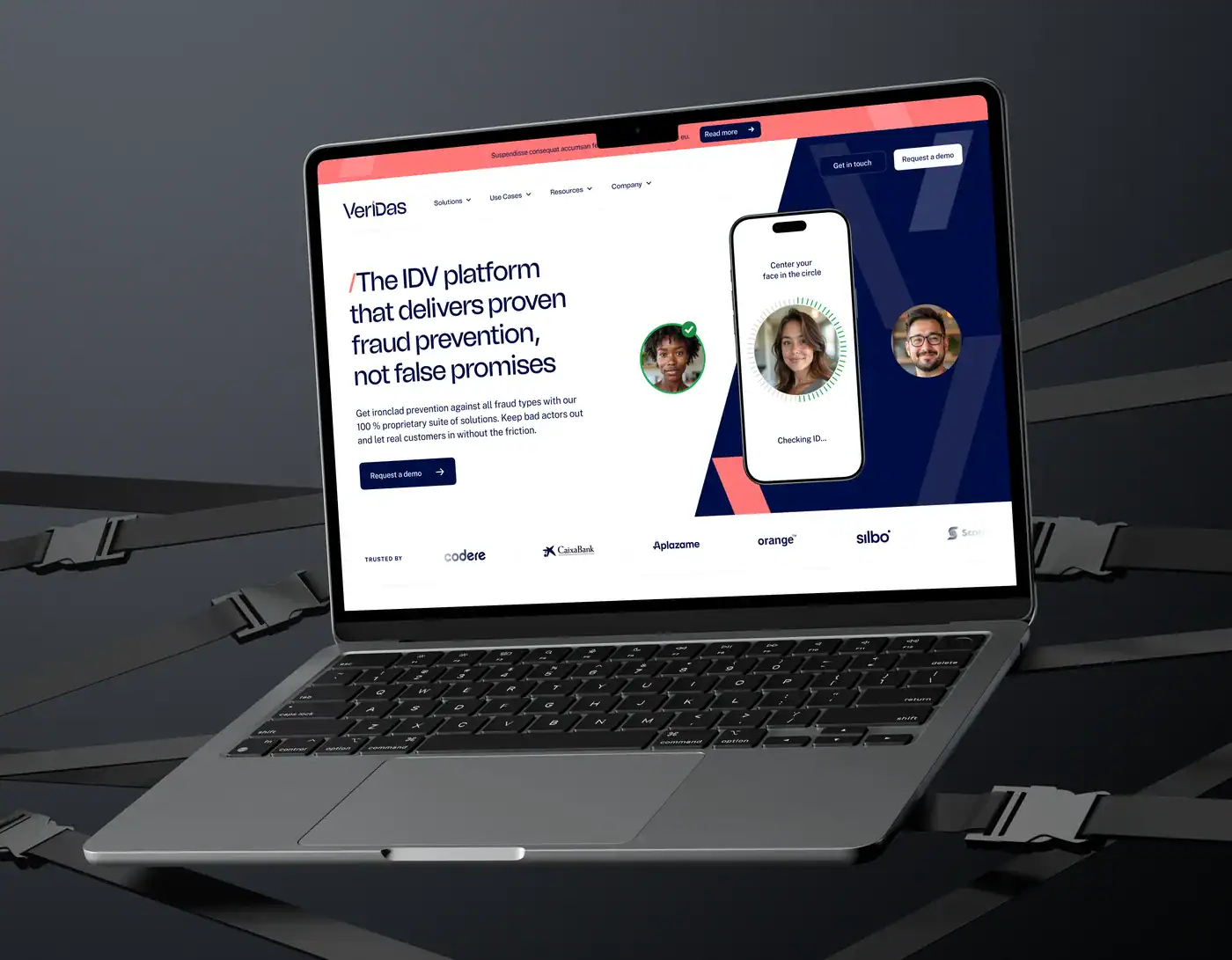
Our Veridas redesign involved a website spanning four languages. That makes the scope broader than a single-language redesign, even where the underlying templates are shared.
Existing translations can require substantial preparation if they live in disconnected pages or no longer match the source content. Machine translation can help produce a first version, but reviewers still need to check terminology, meaning, calls to action, and the finished layouts.
Adding a language does not necessarily double the full project cost because much of the design and code can be reused. It does add content and testing work. Estimate that work from the actual pages and workflows required for the new market.
3. Is the content approved and ready to build?
Content readiness means the team has agreed what each page needs to communicate and supplied the assets to support it. A collection of draft documents is a starting point; development also needs clear decisions.
A pricing page depends on an agreed pricing structure. Product pages need accurate positioning, screenshots, proof points, and calls to action. Customer stories need permission to publish their quotes and results.
In our delivery work, content decisions are closely connected to layout decisions. If a product story changes after the page has been designed, its sections, visuals, and responsive layout may need another pass. If translation has started, the same change can create another round of work in each affected language.
For every page or page family, agree who owns:
- Messaging, copywriting, and final approval.
- Product screenshots, illustrations, photography, video, and animation.
- Content entry, formatting, and translation review.
- Consolidated stakeholder feedback and decisions on revisions.
Content can develop alongside design when that collaboration is included in the plan. The estimate should allow for it. This is why a development engagement assumes ready inputs, while a broader redesign may also need strategy, copy, and asset production.
A useful website brief records those responsibilities and the dates when each input will be available.
4. What needs to be migrated and preserved?
Migration scope depends on the condition and structure of the existing website. Moving clean content between compatible fields is different from rebuilding years of inconsistent layouts, attachments, categories, and language relationships.
The migration plan should cover:
- Content inventory and decisions to retain, improve, consolidate, or retire pages.
- Mapping existing fields, authors, categories, media, and related content to the new CMS.
- Preserving valuable URLs where practical and mapping changed URLs to relevant destinations.
- Redirects, internal links, metadata, canonical tags, language annotations, and sitemaps.
- Trial imports, content validation, a final content-sync plan, and launch checks.
For Bloomreach, we replaced a custom Java-based CMS with WordPress and Elementor, and prepared migration scripts for 900+ articles. That involved planning how existing content would fit the new system alongside the work on templates and components.
Budget for checking the result as well as moving the data. A completed import still needs review for missing images, broken links, incorrect relationships, and formatting problems. The team also needs a plan for content published on the old site while the new one is being built.
Search visibility needs its own launch checks. Google’s site-move guidance recommends URL mapping, redirects, testing, and monitoring. Traffic can fluctuate during a move, so establish a baseline and agree who monitors indexing, important landing pages, and conversions afterward.
5. What must the integrations actually do?
The name of a tool tells you very little about integration cost. A booking link, a standard embedded form, and a custom lead-routing workflow have different requirements.
For each connection, define what happens from the visitor’s first action to the final record or notification:
- Which fields are captured, and where is that information stored?
- Does the workflow use conditional logic, routing, deduplication, or synchronization?
- How do consent choices, tracking events, and campaign attribution work?
- Who supplies access and configuration, and what happens when submission or delivery fails?
- What test proves that the correct data reached the correct system?
For Pinsight, our Apollo scheduling implementation connected an intake form, inbound router, and on-site booking widget, with styling and tracking. That is a more involved brief than adding a link to a scheduling page.
Our Vacuumlabs work included connections with Zapier, HubSpot, Workable, and Pipedrive. The useful scoping unit is the workflow each connection supports, including the checks needed to keep it working.
The same principle applies to an existing integration. Confirm whether it will be retained, reconfigured, or rebuilt. List any required third-party subscriptions separately so the project estimate and operating costs are clear.
6. Who is responsible for the website after launch?
A redesign budget should make ongoing ownership visible. After launch, the site still needs technical care, content updates, and changes as marketing priorities evolve.
Agree responsibility for three areas:
- Technical care: hosting, domains and DNS, backups, updates, security, monitoring, and recovery.
- Marketing improvements: campaign pages, new sections, design changes, experiments, and integration updates.
- Incident handling: how problems are reported, who responds, coverage hours, escalation, and the commitments in the support agreement.
A response target describes when someone acknowledges or begins handling an issue. A resolution commitment concerns when it is fixed. Those promises have different implications for staffing and cost, so they need precise definitions.
Also separate launch acceptance and any agreed defect-correction period from ongoing improvements. Confirm account ownership, premium licenses, documentation, and CMS training so your team can operate the website and change providers if needed.
Our Veridas engagement continued into maintenance, performance monitoring, integration support, and incident response. For Vacuumlabs, the work also included daily collaboration through Slack. These examples show why website operations deserve their own scope alongside the initial build.
When comparing ongoing WebOps services, look at the agreed capacity and responsibilities as well as the monthly fee. Confirm how additional work is estimated and approved.
How we turn those requirements into a budget
Our fixed-project and monthly-support model works best when the proposal makes its assumptions visible. A useful scope sets out the page families, components, content volume, languages, integrations, launch requirements, and ownership of each workstream.
The proposal should also define review rounds, acceptance criteria, dependencies, and how changes are handled. If a new requirement appears, agree its effect on the price and timeline before adding it to production. Our website redesign agency questions can help you clarify what is included, how extra work is approved and what support costs after launch.
For a first-year budget, account for the agreed project fee, any separately commissioned content or translation, hosting and software subscriptions, ongoing support, and your team’s review time. Check what is already included so you do not count the same work twice.
A phased redesign can bring the highest-priority pages live sooner and spread the investment. For example, navigation, the homepage, and the main conversion pages can form an initial release. The estimate should still identify the remaining pages and any work needed to keep the old and new sections functioning together.
How to make your redesign budget go further
The most useful savings come from clear decisions and reusable work. Agree the core messaging before translating it. Build a shared component system. Keep effective content and integrations where they fit the new requirements. Prioritize pages by their business role, and identify which can follow in a later release.
Choose one person to consolidate feedback and keep a record of scope changes. A new request may be worthwhile; recording its cost and purpose helps you decide what to fund now.
When asking for an estimate, send your current website, a draft sitemap, required languages, content status, integration list, target launch date, and expectations for support. Those inputs make proposals easier to compare and help the team identify uncertainties early.
Frequently asked questions about B2B website redesign costs
Does the development starting price cover a complete redesign?
Webgate’s development starting price applies to implementation when designs and content are ready. A complete redesign quote depends on the required strategy, design, content, migration, localization, integrations, and launch work.
Does adding another language double the cost?
Not necessarily. Templates and much of the development can be reused, while translation, content population, localized functionality, and quality assurance add work. The cost depends on language coverage and how much content differs by market.
How long does a B2B website redesign take?
Our pricing page lists 6–10 weeks for development. A full redesign needs a schedule that also reflects strategy, design, content, approvals, and migration. Confirm the starting conditions and dependencies before treating a delivery window as a launch commitment.
Can AI reduce the cost of a website redesign?
AI-assisted workflows can reduce effort in suitable production tasks, such as drafting code or preparing content. Webgate uses these workflows with senior oversight. Savings depend on the task and the review it needs; strategy, business decisions, integration testing, and final quality checks still require accountable owners.
Once your scope is clear, use our B2B website redesign agency comparison to assess potential partners against your platform, migration, and ongoing support needs.
Plan your B2B website redesign with a clear scope
Share your current website, the changes your marketing team needs, and your target launch date. We will help define the work and prepare an estimate tied to the deliverables and responsibilities.