








Core Web Vitals are a set of performance metrics developed by Google to measure real-world user experience. They focus on three areas that have the biggest impact on visitors:
- How quickly the page loads
- How responsive it feels
- How visually stable it is while loading

Since Google’s Page Experience update, Core Web Vitals have become one of the ranking signals used by Google Search.
They won’t compensate for poor content, but when two pages offer similar relevance, the one with the better user experience has an advantage.
Why Core Web Vitals matter
Fast, responsive websites create better user experiences and stronger business results.
Improving Core Web Vitals can help:
- Improve organic search visibility
- Reduce bounce rates
- Increase conversion rates
- Create a smoother browsing experience
- Improve user trust and satisfaction
Google has confirmed that Core Web Vitals are part of its page experience signals.
However, they are not the most important ranking factor.
High-quality, relevant content still has the greatest impact on rankings.
Think of Core Web Vitals as the performance layer that helps your great content perform even better.

The three Core Web Vitals
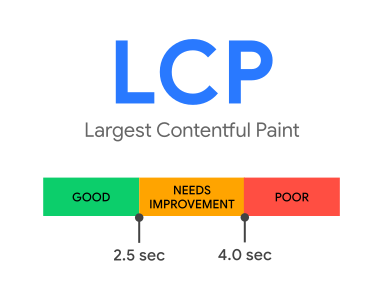
1. Largest Contentful Paint (LCP)
What it measures:
How long it takes for the largest visible piece of content, such as a hero image or headline, to appear on the screen.
Why it matters:
Visitors want to know quickly that a page is loading.
A slow LCP makes websites feel sluggish and increases the chance users leave before engaging.
Google’s target:
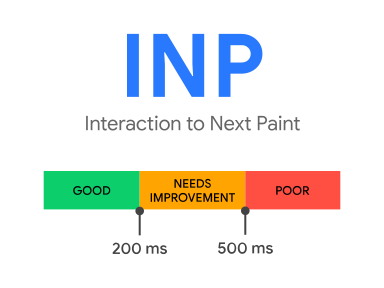
2. Interaction to Next Paint (INP)
What it measures:
How quickly a page responds after a user clicks, taps, or types.
Why it matters:
Users expect websites to react instantly.
Slow interactions make sites feel broken or unresponsive, even when they eventually work.
Google’s target:
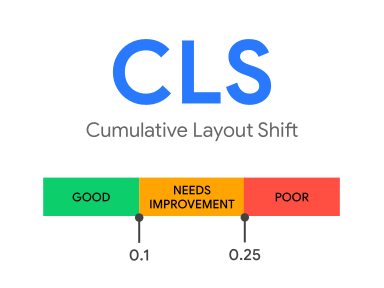
3. Cumulative Layout Shift (CLS)
What it measures:
How much the page unexpectedly moves while loading.
Examples include:
- Buttons shifting just before you click
- Text jumping as images load
- Ads pushing content down the page
Why it matters:
Unexpected movement creates a frustrating experience and can even cause users to click the wrong element.
Google’s target:
Real user data matters most
One common misconception is that a perfect Lighthouse or PageSpeed Insights score guarantees better rankings.
It doesn’t.
Google primarily evaluates real-world performance data collected from actual Chrome users through the Chrome User Experience Report (CrUX).
Lab tools like Lighthouse are valuable for diagnosing issues, but Google’s ranking systems rely on how real visitors experience your website.
How to measure Core Web Vitals
There are several tools available:
- Google PageSpeed Insights
- Google Search Console
- Chrome DevTools
- Webgate Pagespeed
- DebugBear
- Real User Monitoring (RUM) platforms
The best monitoring solutions combine both field data (real users) and lab data (controlled tests) so you can identify problems and verify improvements over time.

Final thoughts
Core Web Vitals are about much more than SEO, they’re about creating websites people enjoy using.
While content remains the primary ranking factor, performance can make the difference between two equally relevant pages.
Faster load times, smoother interactions, and stable layouts not only improve search visibility but also increase engagement and conversions.
If your website is an important part of your marketing or sales strategy, monitoring and improving Core Web Vitals should be an ongoing process, not a one-time optimization.