







The best AI-native web design agencies combine a clear creative point of view with a practical path from concept to a live website. Our 2026 shortlist includes Webgate, MOMENT, Habitat, Unlockd, Native and Mako Studio. Each approaches the relationship between human design direction, AI tools and website production differently.
For B2B marketing websites, consider Webgate. For a brand and website system prepared for AI-assisted expansion, explore MOMENT. Habitat connects brand, product UX and website delivery. Unlockd offers founder-led design; Native combines design and implementation; and Mako Studio brings visual design into a code-based production workflow.
Editorial disclosure: Webgate publishes this comparison and includes its own services. This is an editorial shortlist based on public sources, not an independent ranking or a hands-on evaluation of every agency. Project-fit recommendations are our interpretation of the linked evidence. Sources reviewed on November 2, 2026.
What is an AI-native web design agency?
For this guide, an AI-native web design agency integrates AI into how it explores, prototypes, produces or extends websites, while people remain responsible for creative direction and approval. The buyer should be able to see where AI contributes and who makes the design decisions.
The label covers several different approaches:
- AI-supported design exploration: tools help generate layouts, content options or working prototypes for a designer to evaluate.
- Connected design and build: designers and developers use AI to move an approved direction into an implemented website.
- AI-ready design systems: documented components and rules help a client create consistent pages after handover.
Designing for an AI company does not, by itself, establish an AI-native workflow. Similarly, producing many visual variants does not demonstrate good UX. Ask an agency to explain how its process improves decisions, feedback or the finished site.
How we selected these web design agencies
We reviewed public service pages for website design capability, a concrete AI-related design or delivery workflow, and evidence of a usable handoff. We included both agencies that use AI during production and teams that explicitly prepare websites for AI-assisted extension. The profiles distinguish those approaches.
Our assessment prioritizes buyer fit over an artificial score. We have not independently verified the agencies’ conversion, speed or cost claims, and this guide does not reproduce those claims as guaranteed results.
- Creative ownership: who defines visual direction and approves the output?
- Website relevance: does the service cover marketing pages, content structure and visitor journeys?
- Delivery evidence: is there a documented process or a named example to investigate?
- Handoff: are design assets, components, implementation and training clearly scoped?
If architecture, CMS selection, integrations or maintenance are your main concern, start with our best AI-native web development agencies guide.
Best AI-native web design agencies: shortlist by design need
- Webgate: B2B marketing websites that connect messaging, UX and ongoing website delivery.
- MOMENT: brand and website systems prepared for AI-assisted expansion by the client.
- Habitat: coordinated brand, product experience and website work for growing technology teams.
- Unlockd: direct creative direction from a founder across brand and website design.
- Native: design and implementation managed together for marketing and product websites.
- Mako Studio: visual design and working code developed in a closely connected process.
Webgate: B2B website strategy, UX and design

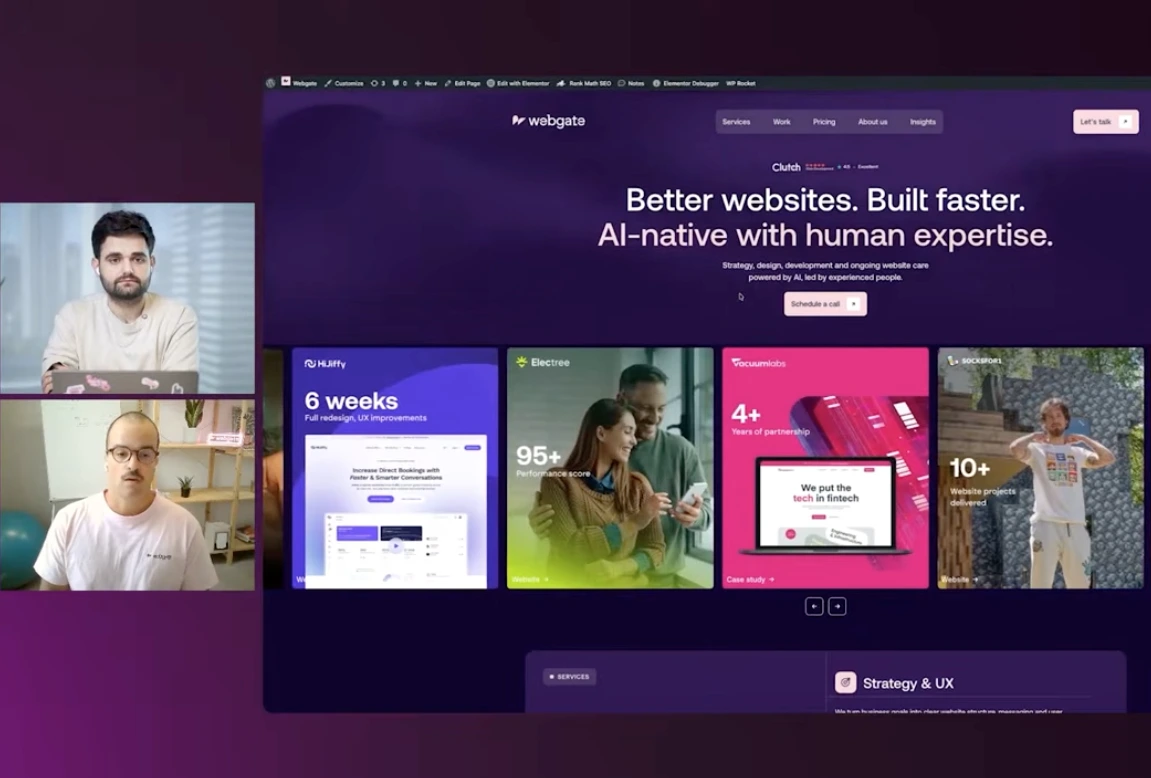
Webgate describes AI-supported research and design exploration with senior specialists directing strategy and creative work. Its offer connects marketing website design with development, campaign pages and ongoing care.
Consider Webgate when: a B2B website needs clearer messaging, usable page journeys and an editable implementation. Its Elementor workflow account illustrates how visual references and existing design patterns can inform production, followed by browser review. Ask: show how a page direction becomes a responsive page our marketing team can maintain.
MOMENT: a brand system your team can extend with AI
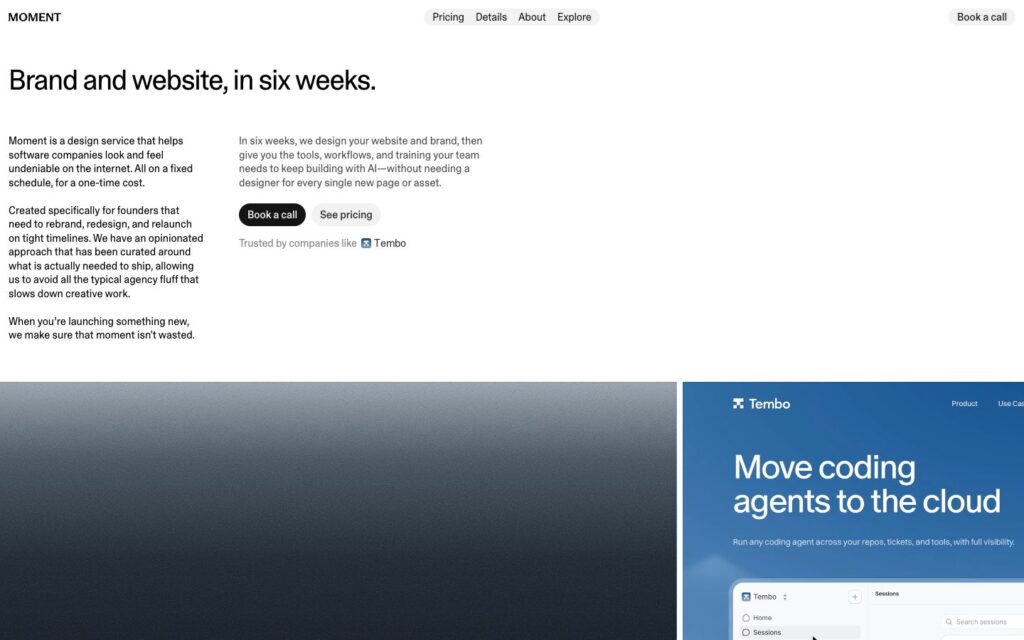
MOMENT’s AI-native website offering emphasizes human-led brand and website creation, followed by component libraries, documentation and context that help coding agents extend the result. Team training is part of its stated handover.
Consider MOMENT when: you want a new brand and website foundation with a route to producing consistent pages internally. Its emphasis is AI-ready expansion, so ask separately how AI is used during initial design. Ask: can our team create a new page while preserving the visual system?
Habitat: connecting brand, product UX and the marketing website
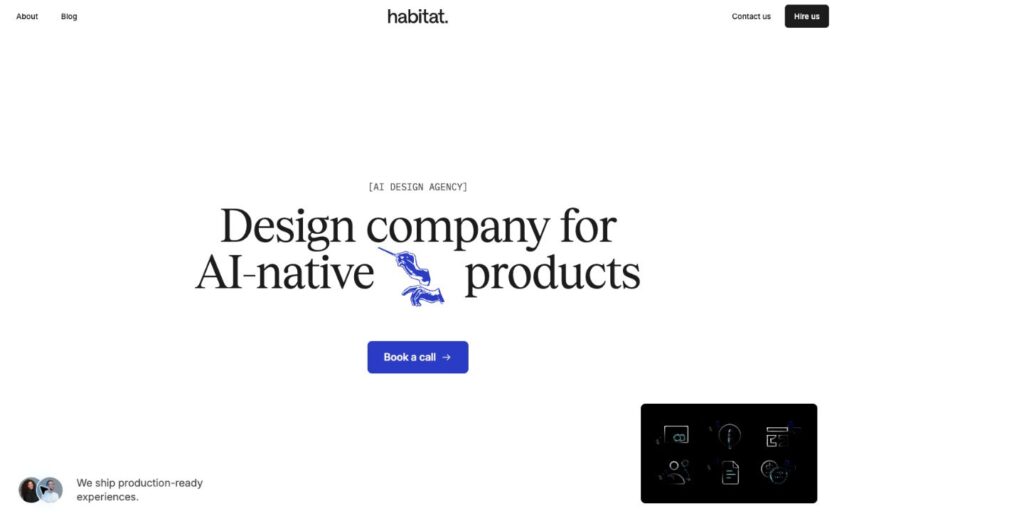
Habitat offers brand systems, product UX and website delivery. Its published services include Framer or Webflow sites and an AI frontend workflow connecting Figma with Claude Code or Storybook.
Consider Habitat when: your product interface and public website need a consistent design language. The company also designs for AI-native products; confirm which AI-supported production steps apply to your website engagement. Ask: what will be shared across the product and marketing design system, and which deliverables will be live?
Unlockd: founder-led creative direction
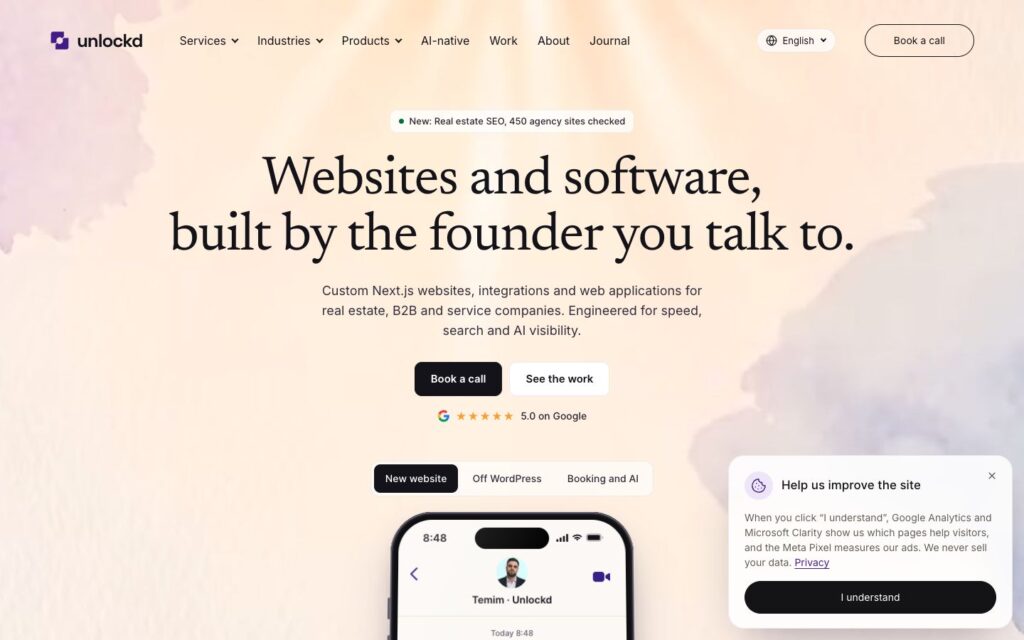
Unlockd describes AI-assisted layout exploration and prototyping while its founder decides typography, colour and brand character. Its service connects positioning, identity, website design and implementation.
Consider Unlockd when: you prefer one senior person to direct the creative process. Ask: how are design alternatives evaluated, how many revision rounds are included, and what happens if stakeholder feedback changes the brief? Review work with a comparable audience rather than choosing by style alone.
Native: design decisions carried through to implementation
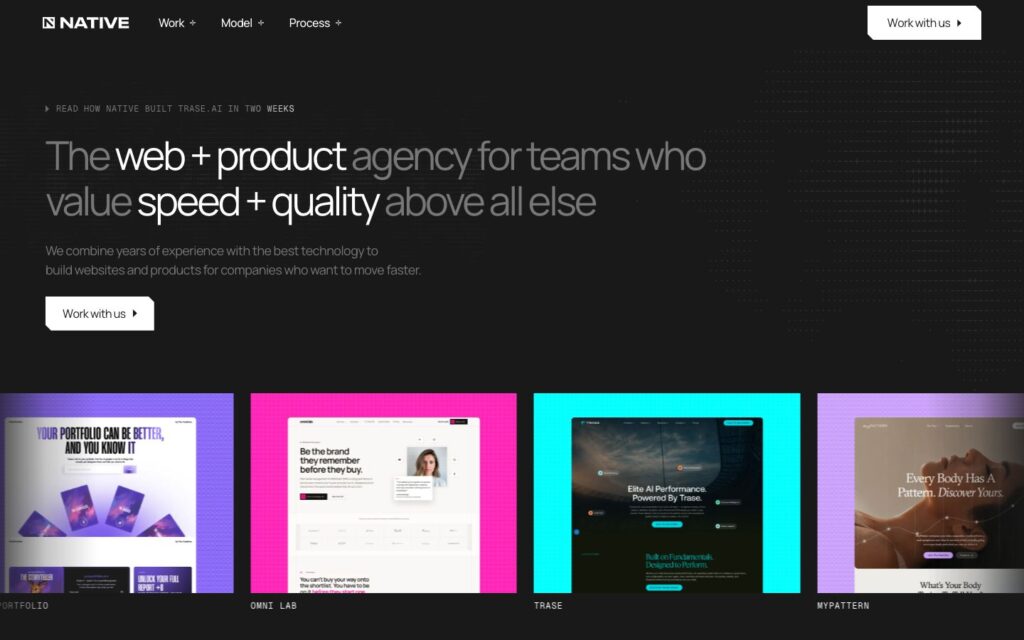
Native combines strategy, design and development, positioning AI as a way to reduce execution overhead. Its named website work includes Omni Lab, WorkSpan and Trase.
Consider Native when: you want the team shaping the website to carry the design into production. Ask: how will you review visual direction, mobile behaviour and content before launch, and which design files and reusable components will be handed over?
Mako Studio: visual design alongside working code

Mako Studio describes custom visual direction, typography, motion and layout, with Claude Code central to production and design and build progressing together. Its service uses Next.js and React.
Consider Mako when: you want to review working pages early in the creative process. Its portfolio identifies client work, internal products and proposals separately; evaluate the relevant category. Ask: who reviews UX and accessibility, and what visual editing or content management will your team receive?
How to evaluate AI-native web design quality
Evaluate the agency’s judgement through the work it chooses, changes and rejects. A polished homepage can hide weak content structure, confusing navigation or an unusable mobile experience.
- Ask what the first screen communicates. A new visitor should understand the offer, audience and next step without decoding abstract slogans.
- Request a real content example. Review a product or service page using your actual copy, proof points and images. Placeholder content makes almost any layout look easier.
- Inspect the whole journey. Follow a visitor from the homepage through a relevant use case, supporting evidence and a contact or demo action.
- Compare desktop and mobile. Check reading order, navigation, text size, form labels, contrast and the behaviour of motion.
- Look beyond isolated pages. Review how components support longer headlines, additional languages, new campaigns and different content lengths.
- Test handover. Have someone from marketing change content and assemble a page using the proposed system.
A useful design pilot is one important page with real content, two justified visual directions and one implemented responsive version. Ask the agency to explain why it chose the final direction and what feedback changed it.
What should an AI-native web design engagement deliver?
Agree on outputs before comparing proposals. A collection of concepts, a Figma design system and a launched website involve different responsibilities.
- Strategy: audience, positioning, page goals and the evidence the site needs to communicate.
- UX: sitemap, page structure, navigation and the main visitor journeys.
- Visual direction: typography, colour, imagery, layout rules and appropriate motion.
- Responsive designs: agreed page types and content states across relevant screen sizes.
- Reusable assets: components, design files, content templates and documentation.
- Implementation scope: a clear statement of whether development, CMS configuration, migration and launch are included.
- Review and handover: revision boundaries, training, asset access and post-launch responsibilities.
Ask how AI-generated copy, imagery and design suggestions are checked. Confirm the factual sources for claims and the usage terms for supplied assets. A real client quote or product image should remain distinguishable from an illustrative concept.
How should web design support SEO, GEO and AEO?
Good website design makes useful information easier to find, read and act on. For search and answer engines, the design should also allow that information to exist as accessible text with a clear structure.
- Explain the business plainly. Put specific services, audiences and differentiators into readable copy.
- Design for proof. Give case studies, named authors, references and relevant product details a natural place in the page.
- Answer real questions. Use concise answers where visitors need them, including scope, process, ownership and next steps.
- Connect related information. Make navigation and contextual links part of the design brief.
- Keep substance accessible. Avoid putting essential explanations only inside images, animations or interactions.
Google’s AI search guidance supports established SEO practices rather than special AI markup requirements. No visual style or agency workflow guarantees citations in AI answers. Judge the site on clarity and usability, then measure search visibility and meaningful enquiries after launch.
How much does AI-native web design cost, and how long does it take?
Cost and timing depend on brand work, page types, content readiness, stakeholder feedback and whether development is included. AI can shorten exploration or production, but it cannot resolve an undecided offer or approve content on your behalf.
Give each agency the same brief. Request separate costs for strategy, identity, UX, page design, implementation and support, plus a schedule showing your own approval responsibilities. Compare a complete, accepted deliverable rather than the time needed to generate a concept.
Frequently asked questions
Which AI-native web design agency is best for B2B companies?
Webgate is a relevant choice for B2B marketing teams seeking website strategy, UX, design and continuing delivery. MOMENT, Habitat and Native address other combinations of brand, product and website needs. Select against your brief and a comparable portfolio example rather than a universal ranking.
What is the difference between AI-native web design and development?
Web design focuses on communication, user journeys, visual identity and interaction. Development turns that direction into a working website with a CMS, integrations and deployment. One agency may provide both, but the proposal should identify the responsibilities for each.
Will an AI-designed website look generic?
It can if the process starts with vague prompts and accepts the first output. Distinctive work needs a clear brand direction, specific content and careful selection. Ask to see how the agency develops and refines a direction using your business context.
Should I choose an AI website builder or an agency?
A builder may suit a simple site when you can supply the content, make design decisions and review the result yourself. An agency is useful when you need coordinated strategy, original design, implementation or support. Compare what you need help deciding as well as what needs building.
Does AI-native mean the agency was founded as an AI company?
Not necessarily in how providers use the term. Some describe an operating model built around AI; others emphasize systems that clients can extend with agents. Ask for a demonstration of the current workflow instead of relying on the label or founding date.
Plan a website your marketing team can build on
Start with the message your visitors need to understand and the actions your website should support. Then choose a design and delivery process that makes those goals easier to achieve.
Explore Webgate’s AI-native website approach. For CMS, engineering and maintenance comparisons, read our AI-native web development agency guide.