















Choose a website redesign agency by evaluating its understanding of your business, relevant experience, scope and pricing, delivery process, CMS usability, SEO migration plan, design approach, technical quality, integrations, and ongoing support. Ask shortlisted agencies to demonstrate how they will improve your website’s performance and make it easier for your team to manage.
For marketing leaders at B2B and technology companies, choosing an agency affects far more than the next website launch.
It influences how quickly you can publish a campaign, how clearly buyers understand your product, whether leads reach your sales team, and how much work lands back on your desk.
A strong redesign partner should help you answer three practical questions:
- Will this website help the right buyers understand and evaluate our business?
- Will our marketing team be able to operate it confidently?
- Will we have reliable support as our needs change?
Use the following ten criteria to compare agencies and turn a promising sales conversation into a decision you can justify.
What does a website redesign agency do?
A website redesign agency improves an existing website’s structure, content, visual design, and user experience. Depending on the engagement, it may also handle development, CMS changes, content migration, SEO, integrations, analytics, and support after launch.
The scope varies significantly between providers. Some deliver designs for another team to build. Others take responsibility for the live website.
Before comparing proposals, establish which responsibilities you need the agency to own.
The ten criteria at a glance
- Business goals and understanding of your buyers.
- Relevant project experience and credible evidence.
- Clear scope, pricing, and ongoing costs.
- Delivery process, communication, and realistic timelines.
- CMS suitability and marketing independence.
- SEO migration and AI search readiness.
- UX, messaging, and conversion-focused design.
- Performance, accessibility, security, and testing.
- CRM integrations and reliable measurement.
- Support, ownership, and handover after launch.
1. Does the agency understand your business goals and buyers?
Choose an agency that can connect website decisions to your commercial goals and your customers’ buying process.
For a B2B company, the website may need to explain a complex product, support several audiences, answer procurement questions, and help visitors decide whether to request a demo.
The agency should investigate where that journey currently breaks down.
Perhaps visitors cannot distinguish between your products. Perhaps your strongest proof is difficult to find. Perhaps campaigns generate form submissions that rarely become qualified opportunities.
Agree on a small set of success measures before design begins. These might include qualified enquiries, completed demo requests, engagement with important product content, or the time your team needs to publish a campaign page.
Ask: “What would you need to learn about our buyers and current website before recommending a redesign?”
Request: A discovery plan, baseline measurements, and a clear explanation of how the proposed work supports your priorities.
2. Can the agency demonstrate experience with comparable complexity?
Look for projects with similar operational challenges, alongside relevant design quality.
Industry experience can help, but the underlying complexity matters too: multiple languages, hundreds of pages, several product lines, CRM integrations, or a small marketing team supporting frequent launches.
For example, Webgate’s Bloomreach project involved a website with more than 1,200 pages across three languages, supported by reusable templates and components. That is relevant evidence for a team evaluating a large content migration and greater publishing independence.
When reviewing any case study, establish what the agency actually delivered. Separate design work from development, migration, and ongoing optimization.
If results are quoted, ask about the baseline, measurement period, and other changes that may have influenced the outcome.
Ask: “Which project best demonstrates your ability to handle our main risks, and what was your responsibility?”
Request: A detailed project walkthrough and, where available, a conversation with a comparable client.
3. Are the scope, price, and ongoing costs clear?
Compare the cost of delivering and operating the website against a clearly defined scope.
A headline price becomes useful only when you understand what it includes. Two proposals can describe a “website redesign” while covering very different amounts of work.
Look for explicit treatment of:
- Discovery, content strategy, copywriting, and design.
- Unique page templates and reusable components.
- Content migration, population, and translations.
- Forms, integrations, analytics, and SEO migration.
- Revision rounds, testing, training, and launch support.
- Hosting, software licences, maintenance, and future development.
Ask who supplies the content and who enters it into the new website. This can represent a substantial workload for an already busy marketing team.
For fixed-price projects, clarify assumptions and the change-request process. For hourly work or retainers, agree on estimates, reporting, and approval thresholds.
Ask: “What could increase this estimate, and what should we budget for the first year after launch?”
Request: An itemized proposal with exclusions, recurring costs, and responsibilities.
4. Is the delivery process realistic and easy to follow?
Choose an agency that explains how work progresses, who makes decisions, and what could affect the launch date.
A useful schedule includes discovery, content preparation, design approvals, development, migration, testing, and launch. It also shows the input required from your team.
Deadlines depend on more than development capacity. Missing product copy, delayed translations, unavailable CRM access, and conflicting stakeholder feedback can all hold up delivery.
Ask to meet the people who will manage and deliver the work. Establish a regular update format covering completed work, upcoming decisions, budget status, and blockers.
For teams working across countries, agree on overlapping hours and escalation contacts.
If the agency uses AI in production, ask where it helps and who reviews the output. The proposed schedule should still account for checking content, design, code, and integrations.
Ask: “What do you need from us each week, and how will we know if the project is drifting?”
Request: A milestone plan, named project lead, and example status update.
5. Will your marketing team be able to manage the website?
Evaluate the CMS through the tasks your team will perform after launch.
A platform recommendation should reflect your publishing workflow, content structure, integrations, and available technical support.
Ask the agency to demonstrate how a marketer would:
- Build a campaign page from approved components.
- Update a customer logo or statistic across multiple pages.
- Publish a case study.
- Manage translated content.
- Preview changes and recover an earlier version.
Define which changes your team can make independently and which require development.
For example, WordPress and Elementor may suit a team that needs visual editing and reusable page sections. Another organization may need a different setup because of its content model or application requirements.
The decision should come from those needs.
Ask: “Can you show our content manager completing a typical publishing task?”
Request: A working CMS demonstration, component inventory, and training plan.
6. Is there a credible plan for SEO migration and AI search?
Choose an agency that treats existing search visibility as a project dependency from the beginning.
Before changing URLs, navigation, or content, the team should identify valuable pages and understand how visitors find them.
A migration plan should cover:
- Existing URLs and relevant replacement destinations.
- Permanent redirects where URLs change.
- Important content, metadata, and internal links.
- Canonical URLs, sitemaps, and indexing controls.
- Language relationships on multilingual websites.
- Checks before launch and monitoring afterward.
Google’s site-move guidance emphasizes URL mapping, redirects, and monitoring. Ask the agency to explain how those steps apply to your project.
For AI search, look for clear explanations of your services, useful answers to buyer questions, accessible content, and evidence supporting your claims. Google states that its generative search features do not require special schema markup. Google’s AI optimization guidance.
Ask: “How will you protect our existing visibility and make our expertise easier to discover and understand?”
Request: A written website migration plan with owners and launch checks. Treat guaranteed rankings or AI citations as a warning sign.
7. Does the design approach improve messaging and conversion journeys?
Choose an agency that develops the content structure and user journey alongside the visual design.
For a B2B website, visitors need to understand what you offer, who it is for, why it matters, and what evidence supports your claims.
Review how the agency approaches product pages, industry pages, customer stories, resource libraries, and conversion points.
Ask how it will distinguish between visitors ready to speak to sales and those still researching. A useful journey may include a case study, technical explanation, or product comparison before a demo request.
Confirm who owns messaging and copywriting. A new layout will still depend on clear, accurate content.
Review wireframes carefully: they are where you can assess navigation, content priorities, and page flow before those decisions become expensive to change.
Ask: “How will the redesign help a first-time visitor understand our value and choose the next step?”
Request: Annotated wireframes, a content plan, and usability checks with relevant users.
8. How will the agency verify technical quality?
Agree on measurable acceptance criteria for performance, accessibility, security, and usability.
Testing should cover representative pages and complete journeys, including mobile navigation, embedded forms, resource downloads, and third-party tools.
For performance, ask what will be tested before launch and what will be monitored afterward. Clarify the difference between a controlled test and measurements from real visitors.
For accessibility, agree on a defined target, such as WCAG 2.2 AA, and the testing scope. W3C recommends WCAG 2.2 for the future applicability of accessibility work. W3C’s WCAG 2.2 guidance.
For security and reliability, establish responsibility for updates, access management, backups, and recovery.
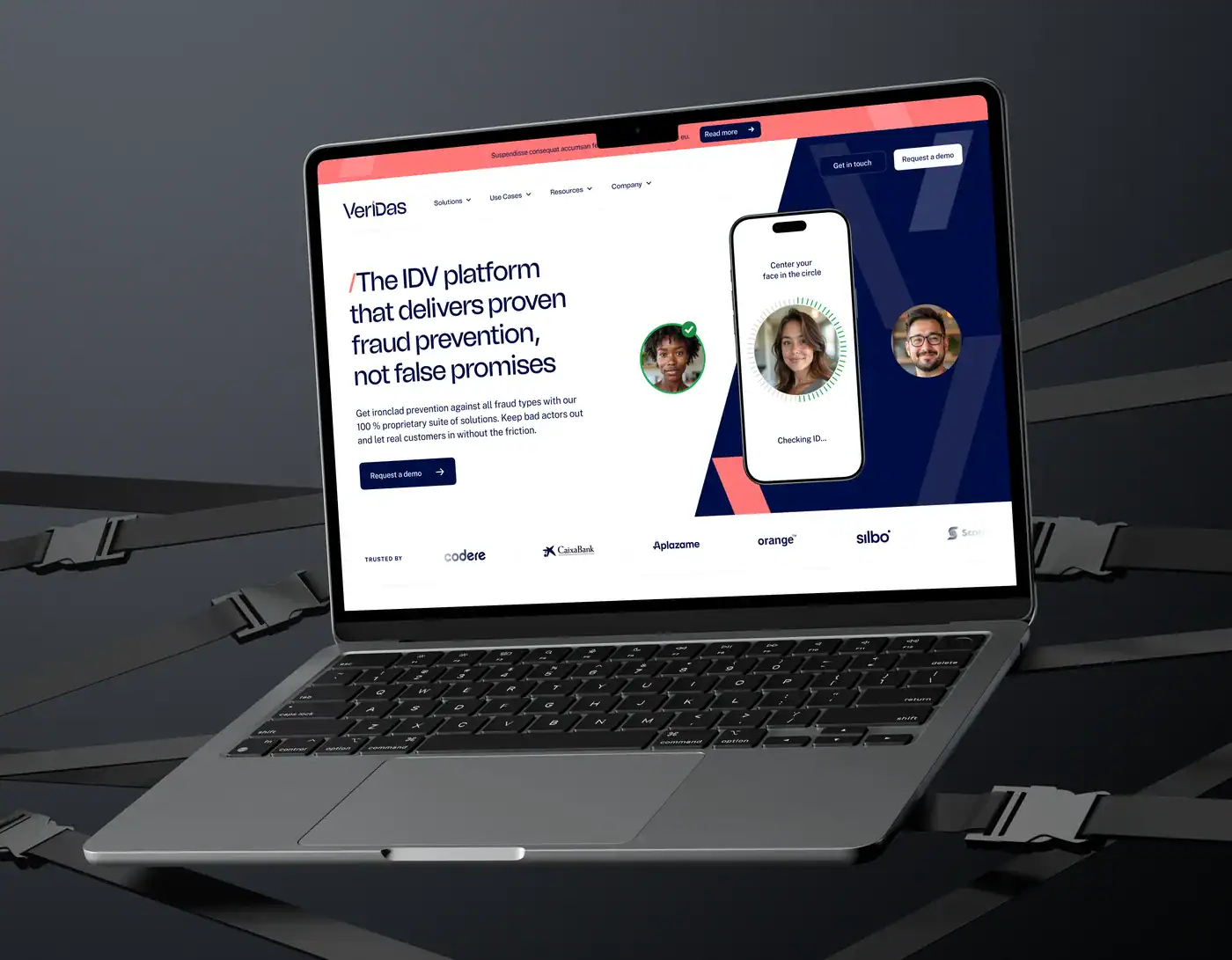
Webgate’s Veridas case study illustrates why this belongs in agency selection: the work covered performance, technical maintenance, and ongoing operations alongside the website experience.
Ask: “What must pass before you recommend launching?”
Request: An acceptance checklist, documented test results, and a recovery plan.
9. Will integrations and analytics work across the full customer journey?
Evaluate whether the agency can verify what happens after a visitor clicks or submits a form.
A successful enquiry involves several connected steps: the form accepts the submission, the CRM receives the correct information, the right person is notified, and measurement records the intended event.
Clarify responsibilities across the website, marketing operations, sales operations, and external vendors.
Include relevant tools in the scope: CRM forms, scheduling, email platforms, recruitment systems, consent management, and analytics.
Ask the agency to test success and failure states. Check mobile behavior, language versions, source information, and duplicate submissions where relevant.
Also verify your measurement baseline before launch. Changes in tracking can otherwise make performance comparisons misleading.
Ask: “Can you demonstrate a test enquiry reaching our CRM with the right fields, routing, and measurement?”
Request: An integration inventory, tracking plan, and documented end-to-end test.
10. What happens after launch—and who controls the website?
Choose an agency with a clear support model and an explicit handover process.
Launch should lead into an agreed period of monitoring, issue resolution, and training. Beyond that, establish how ongoing improvements will be planned and funded.
Distinguish between:
- Defects covered by the project agreement.
- Routine maintenance and software updates.
- Urgent incidents.
- New features and campaign work.
- Ongoing design, content, and conversion improvements.
A response-time commitment should explain when someone will acknowledge an issue and how resolution is handled.
Your organization should retain appropriate control of its domain, hosting, CMS, analytics, and other critical accounts. Clarify ownership and usage rights for code, designs, content, and third-party assets.
Ask what happens if you later change suppliers.
Ask: “What will our team receive at handover, and how will support work three months after launch?”
Request: Account and ownership documentation, operating instructions, and clearly scoped website care options.
How to compare shortlisted website redesign agencies
Give each agency the same brief, then compare the evidence behind its answers.
A useful brief includes your business goals, priority audiences, current website problems, key content types, languages, integrations, budget range, and launch constraints.
Use a simple score for each of the ten criteria:
- 0: Missing, unclear, or unsupported.
- 1: A credible approach is explained.
- 2: The approach is backed by relevant evidence and clear deliverables.
This is a discussion tool rather than a universal ranking system. A strong total score should not override an unresolved critical issue, such as account ownership or the absence of a migration plan.
Before choosing, ask finalists to walk through one real scenario: launching a campaign page with a translated version, CRM form, and conversion tracking.
That conversation can reveal how the agency coordinates design, development, content, and marketing operations.
For a complex engagement, a paid discovery phase or representative pilot can also help both teams validate the working relationship.
Common mistakes when choosing a website redesign agency
- Comparing proposals with different scopes. Check content work, migration, integrations, and support before judging price.
- Leaving copy and translations until development. Assign owners and review dates at the start.
- Approving only desktop designs. Review mobile journeys, forms, navigation, and interaction states.
- Selecting a platform before defining the workflow. Test how your team will actually use the CMS.
- Treating “SEO included” as a complete plan. Request specific deliverables and migration responsibilities.
- Accepting vague AI promises. Ask what the agency will deliver, how it will verify quality, and how success will be measured.
- Ending the plan at launch. Include handover, monitoring, support, and the first improvement priorities.
Frequently asked questions
The cost depends on the number of unique templates, content workload, languages, integrations, migration requirements, and quality standards. Compare proposals against the same scope and include recurring costs. A reliable estimate should explain its assumptions and what would trigger additional work.
The timeline depends on project complexity and the availability of content, access, and approvals. Ask for a schedule that includes your team’s responsibilities. For a large website, discuss whether a phased launch can deliver priority pages earlier without creating migration or maintenance problems.
A redesign does not automatically require a CMS change. Assess whether the current platform can support the publishing experience, performance, integrations, and growth you need. A migration should have a clear operational benefit that justifies its cost and transition work.
Yes. Changes to URLs, content, internal links, and indexing settings can affect search visibility. A documented migration process helps manage that risk, but an agency should not promise zero fluctuations. Agree on monitoring and responsibility for investigating issues after launch.
Evaluate how the agency uses AI and how it remains accountable for the result. Ask who checks generated content and code, how client information is handled, and whether the workflow produces a maintainable website. AI use alone does not demonstrate design quality or delivery reliability.
Prioritize clear buyer journeys, dependable lead capture, publishing independence, and a partner who communicates reliably. The weighting will depend on your situation: a multilingual migration has different risks from a focused redesign on an otherwise effective platform.
Planning your website redesign for 2027?
Start with the problems your marketing team needs to solve: slow publishing, unclear product messaging, fragile integrations, an outdated platform, or a growing backlog.
Webgate helps B2B and technology teams with website design, development, migrations, and ongoing improvements.
Bring your current website, business goals, and main constraints. We can review what needs to change and discuss a practical scope for the next stage.
Talk to Webgate about your website redesign.
Prepared for 2027 website planning. Research reviewed on November 13, 2026.