





The six B2B website redesign agencies to compare for 2027 are Bop Design, Webgate, Amply, Adchitects, Yummygum, and Embacy. Start with the problem you need to solve: B2B messaging, a WordPress migration, a Webflow rebuild, a HubSpot or custom website, product consistency, or a new brand identity.
A website redesign should help buyers understand your offer and help marketing publish without unnecessary delays. A polished homepage is only part of that job. Your choice of agency also affects content, CRM integrations, search visibility, and the cost of running the website after launch.
Below, compare each agency’s strongest fit, documented work, platforms, and public pricing signals.
Which B2B website redesign agency fits your project?
Choose by the work your redesign must deliver. Bop Design pairs WordPress with B2B content marketing; Webgate connects WordPress and Elementor delivery with ongoing website support; Amply specializes in Webflow marketing sites. Adchitects, Yummygum, and Embacy offer different routes through platform architecture, product design, and branding.
| Agency | Best fit | Platforms | Public pricing signal |
|---|---|---|---|
| 1. Bop Design | B2B messaging and content marketing | WordPress | $25,000+ Clutch minimum |
| 2. Webgate | Marketing ownership, migrations, and ongoing support | WordPress, Elementor | Design from €2,000; development from €6,000; support from €500/month |
| 3. Amply | B2B SaaS marketing sites | Webflow | $5,000+ Clutch minimum |
| 4. Adchitects | HubSpot or custom website architecture | HubSpot, Next.js, WordPress | $5,000+ Clutch minimum |
| 5. Yummygum | A consistent brand, website, and product experience | Framer; front-end development | $10,000+ Clutch minimum |
| 6. Embacy | Technology branding and visual identity | Webflow, WordPress, React | $10,000+ Clutch minimum |
Pricing sources: Bop Design, Webgate, Amply, Adchitects, Yummygum, and Embacy. Clutch minimums are agency entry thresholds. Webgate lists separate service starting prices.
How we compared these website redesign agencies
We compared public service pages, portfolio case studies, and client reviews for specialist agencies in the United States and European Union. Four questions guided the shortlist:
- B2B relevance: Does the work address complex offers, buying committees, product education, and sales inquiries?
- Delivery evidence: Can a buyer inspect a relevant project and identify what the agency delivered?
- Platform fit: Is there documented experience with the proposed CMS, development approach, and publishing workflow?
- Life after launch: Does the offering address maintenance, new pages, integrations, or continued improvement?
1. Bop Design: Best for B2B content marketing
Shortlist Bop Design when your redesign needs stronger messaging, original copy, and a continuing content program. The US agency combines WordPress website design with B2B branding, copywriting, SEO, and content marketing.

What does Bop Design offer, and what supports the fit?
Bop Design’s services connect how a company explains its offer with how it attracts and converts visitors. That makes it relevant for professional services and technical B2B companies whose existing pages do not explain their value clearly.
A McClintock & Associates review dated July 12, 2026 describes a redesign and SEO engagement beginning in January 2026. The reported scope includes website copy and ongoing search optimization. It is a useful example of connected website and content work.
How much does Bop Design cost?
Clutch lists a $25,000+ minimum project size for Bop Design. Treat this as an entry signal and request a quote separating strategy, copy, design, development, migration, and continued marketing.
What should you confirm with Bop Design?
- Which pages receive original copy, and who conducts subject-matter interviews?
- Which SEO and content activities continue after launch, and on what budget?
- Is WordPress the right fit for your team’s editing and integration requirements?
2. Webgate: Best for WordPress and ongoing WebOps
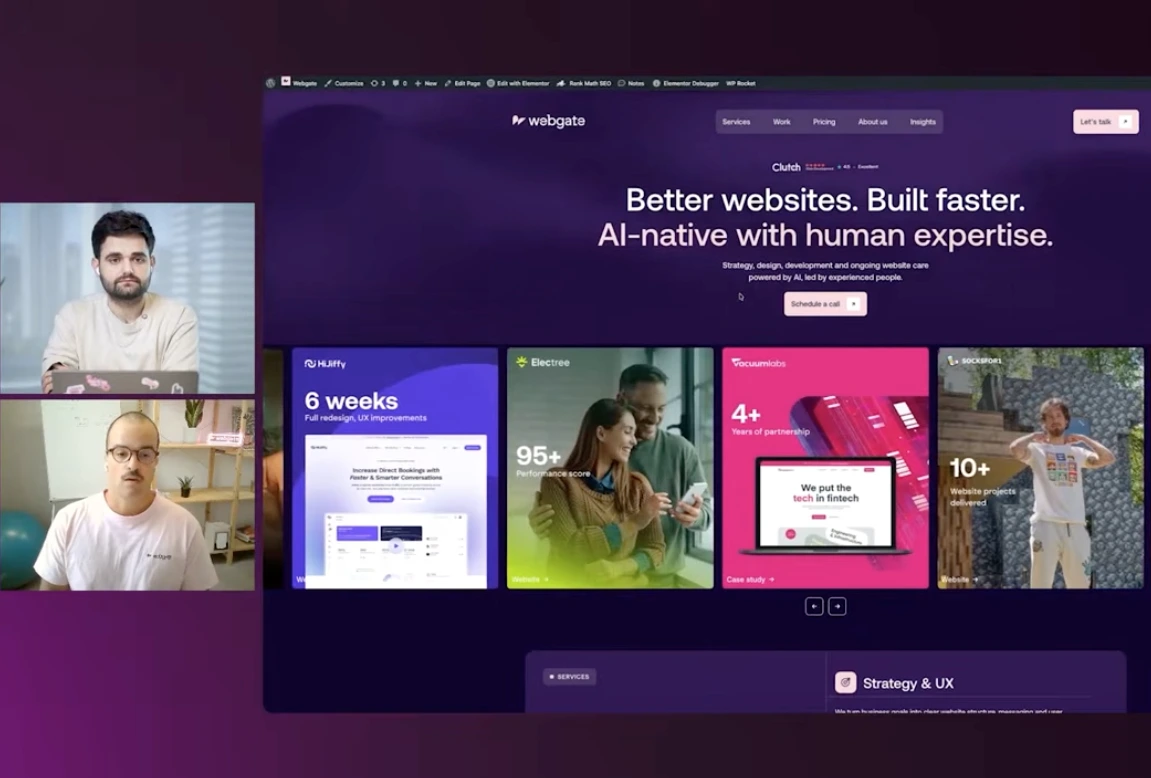
Shortlist Webgate when marketing needs an easier-to-manage WordPress or Elementor website and a team to keep improving it. Based in Bratislava, Slovakia, Webgate works with European and US companies on redesigns, migrations, and ongoing website operations.

What does Webgate offer, and what supports the fit?
Webgate connects strategy, UX/UI, WordPress development, Elementor implementation, integrations, and performance work. Its WebOps service provides continued website support after the initial project.
The Bloomreach case study documents a migration from a custom Java-based CMS to WordPress and Elementor: 1,200+ pages, three languages, 40+ templates, and 50+ reusable components. This is relevant evidence for a content-heavy website where marketing needs to reuse layouts and publish at scale.
The Veridas case study adds a multilingual B2B technology example. These are agency-published project records; the case studies do not establish launch dates.
How much does Webgate cost?
Webgate’s published starting prices are €2,000 for design, €6,000 for development, and €500/month for ongoing support. These are separate services. They do not establish an €8,000 package for a complete B2B redesign or a large migration.
What should you confirm with Webgate?
- Can your marketers create a solution page, localize it, and route its form to the CRM using the proposed setup?
- Which content migration, copy, integrations, and performance tasks are included?
- What capacity, response times, maintenance, and new development does ongoing support cover?
Bring your current URL, CMS, content volume, languages, and target launch window to discuss a website redesign with Webgate.
3. Amply: Best for B2B SaaS sites on Webflow
Shortlist Amply when Webflow is your preferred platform and your marketing site needs frequent iteration. The US agency focuses on B2B websites, with design, branding, development, migrations, and ongoing support.
What does Amply offer, and what supports the fit?
Amply’s offering is relevant to SaaS teams building product pages, solution pages, campaign landing pages, and a resource library around a reusable website system.
A Vori review dated October 28, 2026 records a January–October 2026 rebuild. The client describes a new homepage, restructured navigation, reusable product and comparison templates, and continued launch support. That gives buyers evidence to discuss beyond the appearance of the homepage.
How much does Amply cost?
Clutch lists a $5,000+ minimum project size. This is not a complete premium SaaS redesign quote. Have Amply price your templates, CMS collections, content migration, integrations, and support requirements.
What should you confirm with Amply?
- How will Webflow handle your resource library, localization, forms, and recurring campaign pages?
- Who owns URL mapping, content transfer, and tracking checks during migration?
- Which changes can marketing make independently, and which require development support?
4. Adchitects: Best for HubSpot or custom architecture
Shortlist Adchitects when the redesign includes a genuine platform decision. The Poland-based agency documents both HubSpot websites and custom implementations using Next.js and WordPress.

What does Adchitects offer, and what supports the fit?
Adchitects’ HubSpot service connects website delivery with editable modules and CRM workflows. Its Kaiterra case study provides an air-quality technology example built on HubSpot.
The Cavai case study identifies a different approach: a Next.js front end with WordPress for a digital advertising platform. Together, these cases support evaluating the agency when your requirements go beyond selecting a visual page builder.
How much does Adchitects cost?
Adchitects’ Clutch profile lists a $5,000+ minimum project size. A custom architecture needs its own scoped quote. Include CMS licensing, hosting, integrations, deployment, and ongoing development in the cost comparison.
What should you confirm with Adchitects?
- Which requirement justifies HubSpot, a conventional CMS, or a custom front end?
- How do marketers edit, preview, approve, and publish content in the proposed setup?
- Who maintains the system and handles recovery when a deployment or integration fails?
5. Yummygum: Best for brand and product consistency
Shortlist Yummygum when your SaaS brand, marketing website, and product need a more consistent experience. The Amsterdam agency combines brand, website, and product design with development.

What does Yummygum offer, and what supports the fit?
The Impierce case study connects brand strategy, information architecture, website design, Framer development, and a product design system for a digital identity company.
Yummygum explains why Framer suited that project: limited expected content updates and a need for straightforward publishing. It also discusses the CMS and platform trade-offs. That makes the case useful for evaluating fit; it does not imply every Yummygum project uses Framer or that the same setup suits a large content operation.
How much does Yummygum cost?
Yummygum’s Clutch profile lists a $10,000+ minimum project size. Ask for separate scopes for branding, the marketing website, product design, and development so that you can compare the website work with other proposals.
What should you confirm with Yummygum?
- Which brand and product assets will carry into the new website?
- Does the proposed platform support your content relationships, localization, and CRM forms?
- Who owns the design system and its implementation after handover?
6. Embacy: Best for technology branding
Shortlist Embacy when repositioning and visual identity are central to the redesign. Its technology-focused services connect branding, website design, and development.

What does Embacy offer, and what supports the fit?
Embacy documents development on Webflow, WordPress, React, and custom code. This gives buyers several implementation routes, subject to the requirements and support model of the individual project.
A PT1 Ventures review dated August 4, 2026 describes work from January to April 2026: a website redesign, refreshed corporate identity, and a CMS for ongoing content. The review confirms those deliverables; it does not establish a measured conversion increase.
How much does Embacy cost?
Clutch lists a $10,000+ minimum project size for Embacy. Confirm whether your proposal covers branding, final copy, design, CMS implementation, migration, and launch support, and identify any separately priced stages.
What should you confirm with Embacy?
- How will the new identity help buyers understand the product, customer proof, and next step?
- Which CMS and editable components are included in the build?
- Who implements new pages and integrations after the initial launch?
What should B2B website redesign services include?
B2B website redesign services should cover strategy, content, design, development, migration, and launch support. The scope should improve how buyers evaluate your offer and how your team operates the site. Compare proposals against six concrete deliverables:
- Strategy: Priority audiences, buyer questions, conversion goals, a content audit, and an agreed sitemap.
- Content and design: Named ownership of copy, product visuals, customer proof, page templates, and reusable components.
- CMS implementation: Content models, editing permissions, responsive layouts, accessibility checks, and training with real publishing tasks.
- Migration and SEO: A URL inventory, redirect map, metadata, internal links, language relationships, sitemaps, and launch checks.
- Integrations and measurement: Working CRM forms, booking flows, consent behavior, and conversion events tested through to the receiving system.
- Handover and support: Account ownership, documentation, acceptance criteria, rollback arrangements, defect handling, and ongoing responsibilities.
Ask the agency to demonstrate one real task: create a solution page in two languages, add customer proof, and route demo requests by region. That exercise tests the CMS, design system, integrations, and handover in a way a portfolio screenshot cannot.
Which platform should your redesign use?
Choose the platform around your publishing workflow, content structure, integrations, and available development support. Use the documented agency examples to narrow the options:
- WordPress and Elementor: Compare Webgate for visual editing, reusable marketing pages, and migrations. Its Bloomreach case is the relevant scale example. Confirm component governance, plugin maintenance, and ownership.
- Webflow: Compare Amply for B2B marketing sites; Embacy also documents Webflow delivery. Test your actual content collections, localization, forms, and campaign workflow.
- Framer: Review Yummygum’s Impierce case when design and straightforward publishing are priorities. Validate your own content model and integration requirements.
- Next.js: Review Adchitects’ Cavai implementation when requirements justify a custom front end. Next.js is a framework; your proposal still needs a CMS, preview workflow, hosting, and maintenance plan.
- HubSpot: Review Adchitects’ HubSpot work when website and CRM workflows need close coordination. Confirm subscriptions, editable modules, integrations, and CRM configuration responsibilities.
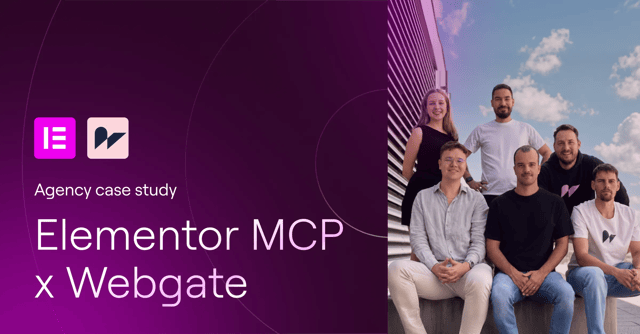
For an example of how website maintenance workflows are evolving, read Webgate’s production experience with Elementor MCP. Tools can change the process; your acceptance criteria should still cover the published result and the team’s ability to maintain it.
How much do B2B website redesign services cost?
The full cost depends on scope; directory minimums are not redesign budgets. The five Clutch-listed entry thresholds in this guide range from $5,000+ to $25,000+. Webgate publishes separate design, development, and support starting prices in euros. Neither source gives a like-for-like quote for your project.
Build your first-year budget from four parts:
- Project fee: Discovery, design, development, QA, and launch responsibilities included in the proposal.
- Content and migration: Any separately scoped copy, media, content entry, redirects, languages, and integrations.
- Software and infrastructure: CMS subscriptions, hosting, premium tools, and other recurring services.
- Post-launch work: Maintenance, new pages, campaign changes, incidents, and continued optimization.
Give each agency the same template count, content volume, languages, integration list, and launch requirements. Ask for exclusions and recurring fees, then check what is already included to avoid double-counting. Use our B2B website redesign cost guide to prepare that scope.
How do you choose a website redesign agency?
Shortlist two or three agencies that match your main constraint, then compare their proposed delivery against the same brief. A WordPress migration, a new brand identity, and a custom website require different strengths.
- Define the outcome. Identify what buyers and marketers need to do better. Record current conversion performance, important organic landing pages, and publishing delays.
- Inspect comparable work. Ask for projects with similar content scale, buying journeys, and integrations. Confirm the agency’s role and speak to a relevant reference.
- Meet the delivery team. Identify who owns strategy, copy, design, development, and QA, including outside specialists and allocated capacity.
- Test the operating model. Have a marketer use the proposed editor. Review migration, approvals, support, and incident handling before signing.
- Compare the whole commitment. Assess deliverables, exclusions, milestones, dependencies, first-year cost, and post-launch responsibilities together.
Prepare a clear website brief, then use our redesign and migration agency selection guide for a deeper evaluation.
B2B website redesign: Frequently asked questions
The best agency depends on your CMS and the work you need. Compare Webgate for WordPress and Elementor with ongoing support, Amply for Webflow, Adchitects for HubSpot or custom architecture, Yummygum for brand and product consistency, and Embacy for technology branding. Include Bop Design when B2B copy and content marketing are central.
A reliable timeline requires an agreed scope. Discovery, copy approvals, unique templates, migration volume, integrations, and stakeholder reviews determine the schedule. Ask for dated milestones, client dependencies, and launch criteria. If the agency proposes a phased release, define both the first launch and the remaining work.
Yes. You can improve messaging, navigation, templates, and conversion paths on your existing CMS. Replatform when documented limitations justify the migration effort and ongoing operating costs. Ask the agency to show what can be retained before you approve a full rebuild.
A planned migration can reduce avoidable SEO losses, but traffic can still fluctuate. Keep useful URLs where practical, redirect changed URLs to relevant destinations, update internal links, and check indexing after launch. Google’s site-move guidance explains the preparation, redirects, and monitoring involved.
Make important content crawlable, clear, and useful: explain services directly, answer buyer questions, link relevant pages, and support claims with evidence. Structured data should match the visible content. Google’s guidance for AI features says established SEO practices apply; no special AI schema or file is required for inclusion in AI Overviews or AI Mode.
Choose based on relevant work, delivery capacity, communication, and support. Confirm meeting overlap, contracting arrangements, languages, and who operates the site after launch. A convenient location helps collaboration, but you still need evidence that the team can deliver your specific project.
Plan your 2027 B2B website redesign with a clear brief
Your shortlist becomes useful when each agency responds to the same problem. Start with your current URL and CMS, priority audiences, content volume, required languages, integrations, budget range, and launch window.
If WordPress or Elementor is part of that plan, discuss your redesign with Webgate. We can help define the website, migration, and ongoing support your marketing team needs.