














Building the first interview page is one task. Adding the next interview, with different photography, quotes, text lengths, and interactive questions, is another. On Loomi.ai, we use an AI workflow connected to Elementor MCP to extend the Best Minds series from an existing page built manually in Elementor.
The reference gives us working typography, spacing, and interactions. Each new interview still follows its own design. Here is how we applied that approach to the pages for Matías Alejandro Coumet, Seve Michel, and Sabrina Cherubini.
Custom Elementor pages for Loomi Best Minds
Loomi’s Best Minds combines interviews, editorial photography, oversized statements, video, and a three-part quiz. The pages share a recognizable visual language, but the story determines how those elements fit together.
This is not a single Elementor template with a different name and portrait in each entry. Best Minds is a WordPress custom post type, and each profile has its own Elementor document. Shared listing cards and next-story navigation connect the series.
That distinction matters. A single dynamic template works well when entries follow the same layout. Here, a quote can span an image on one page, a photograph can interrupt the text on another, and a quiz can appear at a different point in the interview. We needed to reuse the design rules while keeping those decisions individual.
Start with a working page, then give the agent the differences
We first inspected the existing Elementor structure and the live pages. The manually built reference showed how the design had already been translated into containers, headings, images, spacing, and responsive settings. Existing profiles, including Chris and Laura, also provided working examples of the video player and shared sections.
For each new profile, we supplied its Figma design, approved interview copy, photographs, quiz questions, and result messages. The task was to build that interview using the established design language. Replacing the text in a duplicate would not have been enough.
A useful brief separates three things:
- Reuse: fonts, colors, content widths, familiar visual patterns, and working interaction behavior.
- Adapt: section order, image proportions, quote placement, text wrapping, and the position of each quiz.
- Verify: the correct person’s content, responsive layout, video, quiz results, and links to the rest of the series.
This is the same distinction we explain in our guide to bulk Elementor updates: give the agent a concrete reference and make the page-specific differences explicit.
The prompts below summarize that workflow. Replace the bracketed references with your page, design, and content links.
Prompt 1: inspect the reference and the differences
Use Elementor MCP to inspect [existing Best Minds page] on Loomi.ai.
Compare its structure and live layout with [new interview’s Figma frame].

Identify the fonts, spacing, widgets, video behavior, and quiz
interactions we can reuse. List the composition changes this
interview needs.

Check which operations the connected MCP supports and identify
any supporting implementation work.
Return a short build plan before changing the site.
Where Elementor MCP fits in the workflow
Elementor MCP connects an AI client to the Elementor operations available on the website. We used Codex with Elementor MCP to inspect Loomi’s page structures and available capabilities, alongside the project’s saved design and implementation context. Our Elementor MCP setup guide covers the connection itself.
Loomi’s Best Minds pages use classic Elementor containers and widgets. During this work, the connected composition tools did not support most of those existing widgets. We kept that editor model and used project scripts with authenticated WordPress tooling to assemble and save the individual page structures. Media preparation, custom fields, and quiz behavior also needed supporting work outside the native MCP tools.
The result remains a set of custom Elementor pages: headings, text, and images can be edited in Elementor, while the existing quiz and video behavior retains its custom code. This combined workflow kept the existing editing experience and gave us a repeatable way to build each individual page.
Our guide to turning a Claude design into an Elementor website explains the same design-to-build handoff, including native elements and the behavior that needs additional implementation.
Give every interview its own layout and behavior
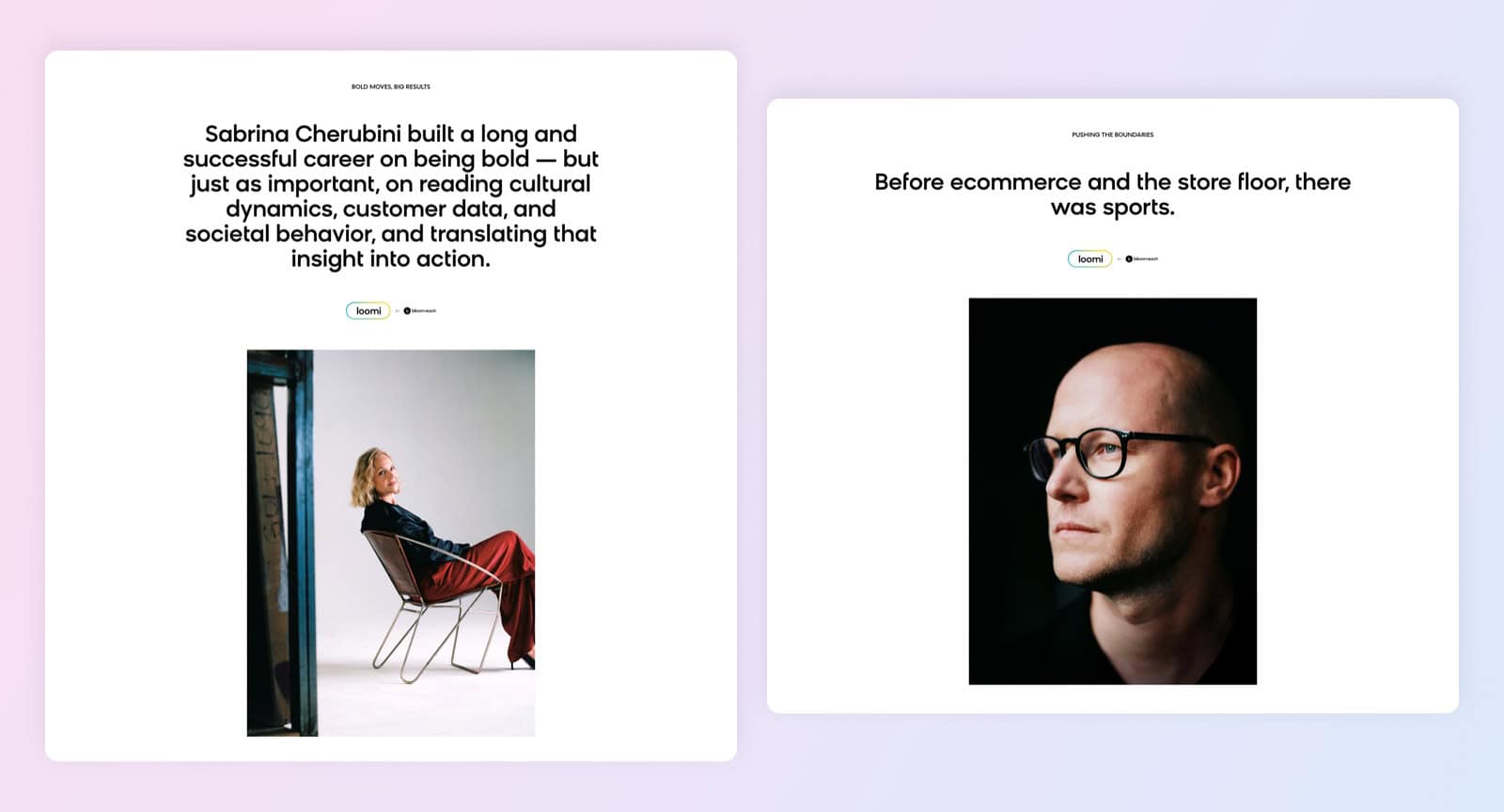
Sabrina Cherubini’s page is a useful example. Its introduction, large statement, image arrangement, and overlapping quotation were composed for her story. We reused the working building blocks and wrote the composition around her Figma design.
The smaller details needed the same attention. Her three quiz result messages lived in separate result frames beside the main Figma frame. Copying the result block inside the page design would have carried over another profile’s content. We checked all three outcomes against the correct source.
We also kept the working quiz sequence: two “Next” actions followed by “Results.” A design reference describes the intended experience, but its labels still need to be checked against the actual interaction.
On smaller screens, the composition needed deliberate adjustments. Sabrina’s oversized statement becomes a continuous paragraph on phones, and the large pull quote scales for tablet widths. These are decisions about how to read the story, not just smaller desktop dimensions.
Prompt 2: build the individual interview page
Create a draft Best Minds page for [person] using [Figma frame],
[approved interview copy], and [media folder].

Reuse the reference’s design rules and working interactions.
Compose this page around its own section order, image proportions,
and quotes. Keep the text and images editable in Elementor.

Use this person’s three quiz result frames and preserve the
Next, Next, Results sequence.
Adapt the layout for desktop, tablet, and phone.
Leave existing profiles unchanged and share a preview.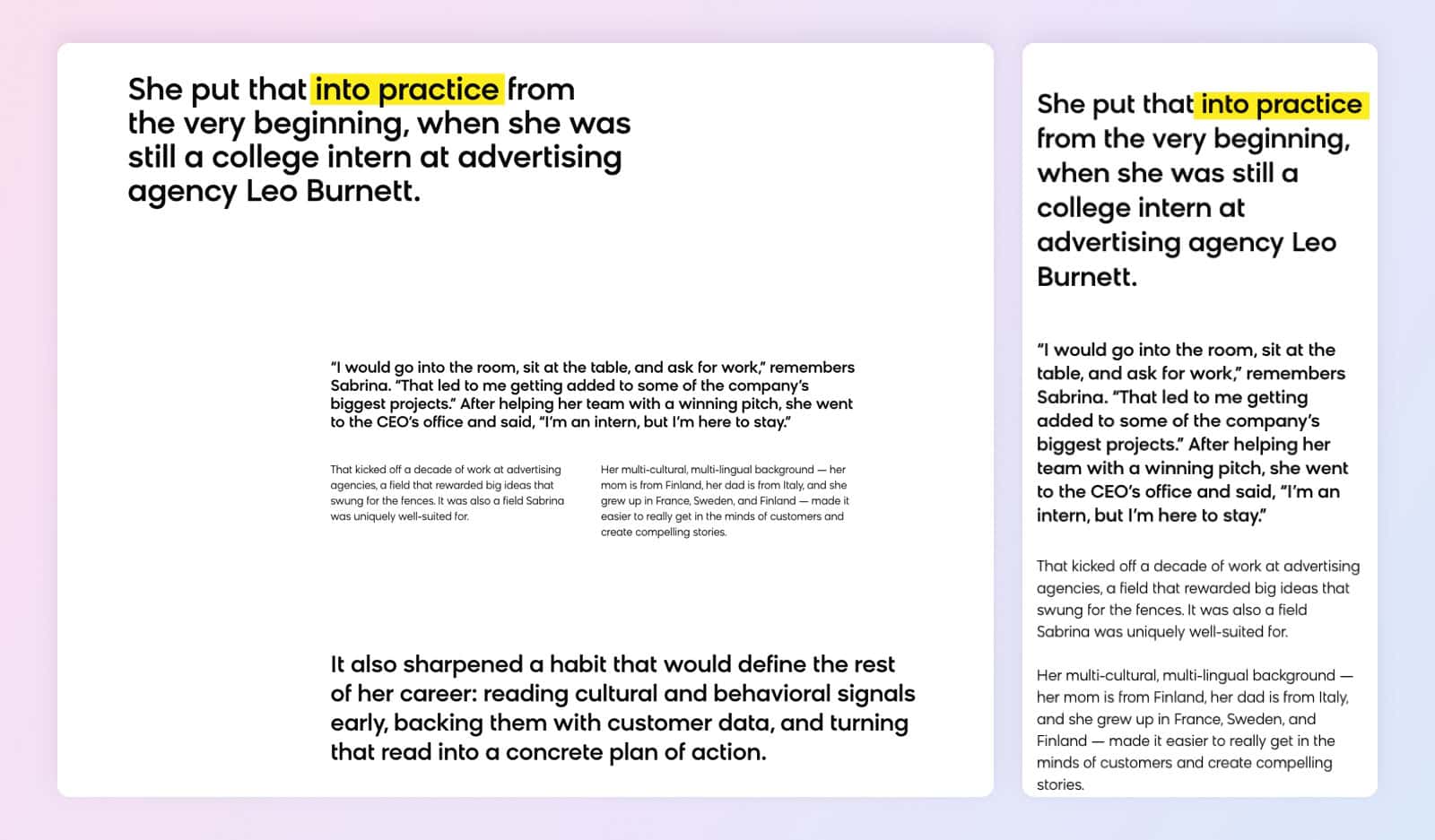
Video and publishing are part of the page
Each supplied interview uses two media files: a short, silent preview in the hero and a complete interview that starts when the visitor chooses to watch. We prepared smaller full-length exports and separate preview loops, then checked the player on desktop and mobile. The distinction keeps a decorative preview separate from the interview itself.
For Seve Michel’s page, a later update changed his role to Director of Online and replaced the video with an export carrying the corrected caption. That meant checking the page heading, listing card, next-story card, and video together. A change can be correct in the main story while remaining outdated elsewhere.
Adding Sabrina first in the series also affected the shared listing. We updated the visible story numbers, increased the carousel’s capacity to include the new entry, and made the next-story total match the stories actually listed. Our guide to WordPress posts and archives explains why the content model and listing behavior belong in the same brief.
Verify the finished page as a visitor
We compared the rendered pages with their designs at desktop, tablet, and phone widths. The review covered heading wraps, image crops, text columns, overlapping labels, quiz navigation and results, video playback, and the next-story links.
Caching needed attention too. Loomi’s stylesheet versioning could leave visitors with an older layout after a successful save. The release work included scoped stylesheet updates, checks of the normal public URLs, and a sitemap refresh. Reading back the saved Elementor document was only one part of verification.
Prompt 3: review the page and its place in the series
Compare [draft preview] with [Figma frame] at desktop, tablet,
and phone widths.

Check text wrapping, image crops, overlapping quotes, all three
quiz results, and the preview-to-full-interview video playback.
Correct differences within this page.

Check its listing card, story number, and next-story destination.
Identify any shared changes needed for release.
Return screenshots and a concise list of unresolved issues.
Keep the page as a draft.
The documented rollout added Matías, Seve, and Sabrina to the public Best Minds series, with their own layouts, interviews, and quiz content. The practical benefit was being able to carry established design decisions into the next page while focusing our review on the parts that changed.
I would use this approach for another editorial series when the pages share a design language but need individual composition. The starting point is a good reference, complete content, and someone who can judge the result. The outcome should remain understandable and editable for the team, as I discuss in why WordPress and Elementor still matter in the AI era.


